Field Work

Magnetic Measurements in Worldwide Observatories (1982 – present)
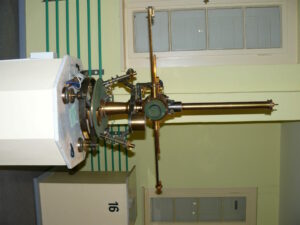
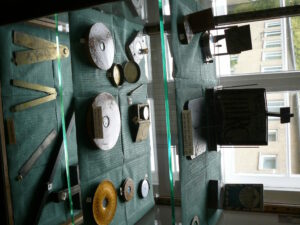
Magnetic observatories have monitored Earth’s magnetic field since the early 19th century, beginning as small, isolated stations using simple instruments to record declination, inclination, and intensity. Over time, they became highly standardized scientific facilities that provided continuous, precise data crucial for navigation, geomagnetic mapping, and understanding long-term changes such as secular variation and geomagnetic storms.
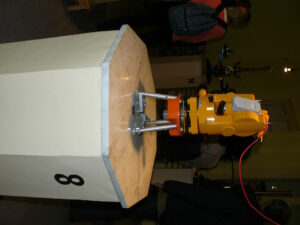
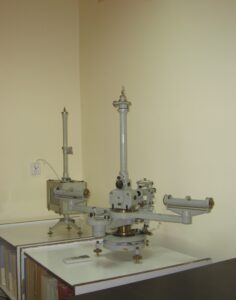
Today, magnetic observatories operate within a coordinated global framework led by INTERMAGNET (the International Real-Time Magnetic Observatory Network). Created in the late 1980s, INTERMAGNET sets strict standards for data quality and real-time reporting, allowing observatories worldwide to share consistent, high-precision measurements. This international collaboration supports global magnetic field models, satellite missions, and space-weather forecasting, making observatories more important than ever. I had the chance to do measurements in many observatories as Surlari (Romania), Chambon-la-Foret (France), Niemegk (Germany), Aquila (Italy), Belsk (Poland), Edinbourough (UK), Conrad (Austria), Hermanus (South Africa), Vassouras (Brazil), Phu Thuy (Vietnam), etc.


Repeat Magnetic Measurements in France (1997 – 2002)
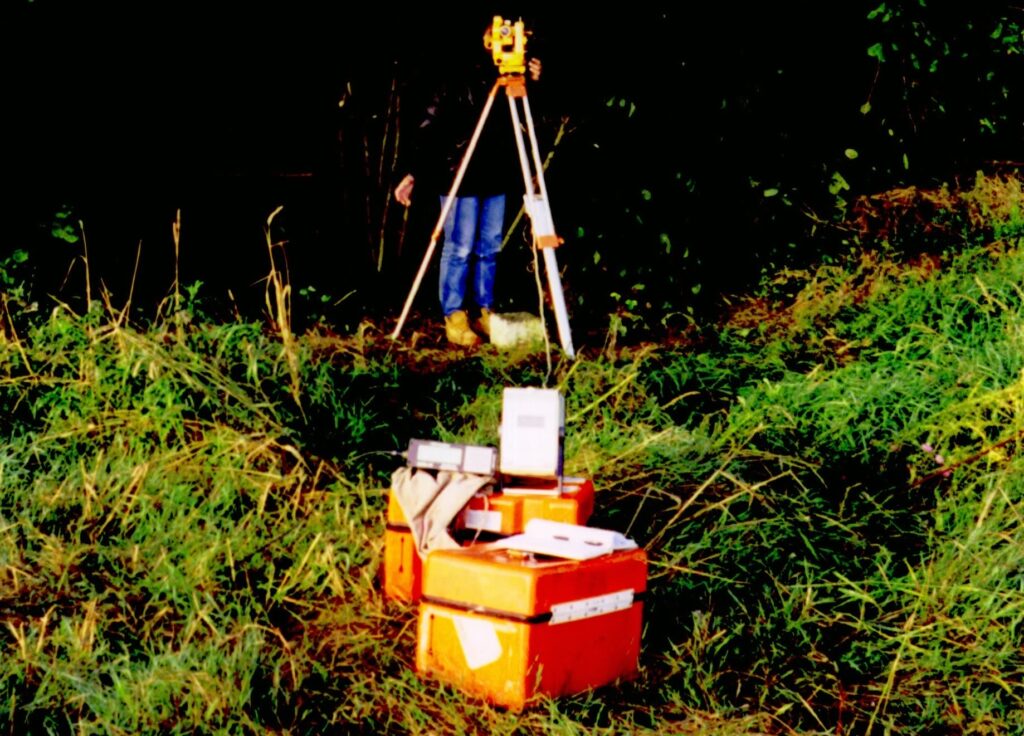
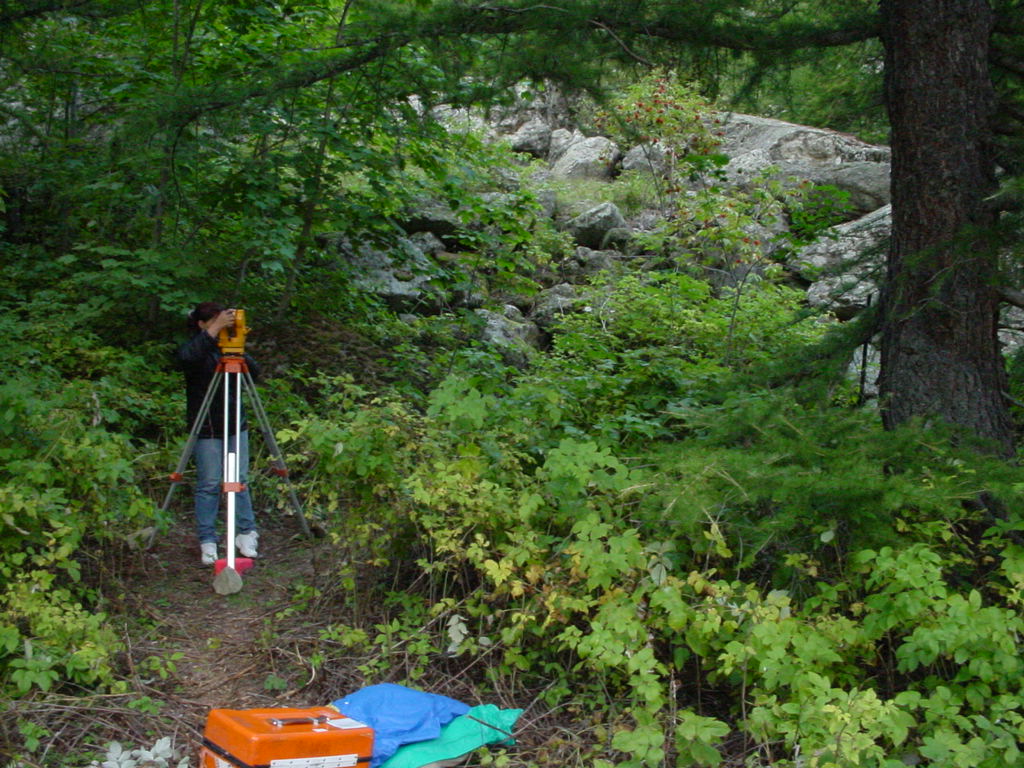
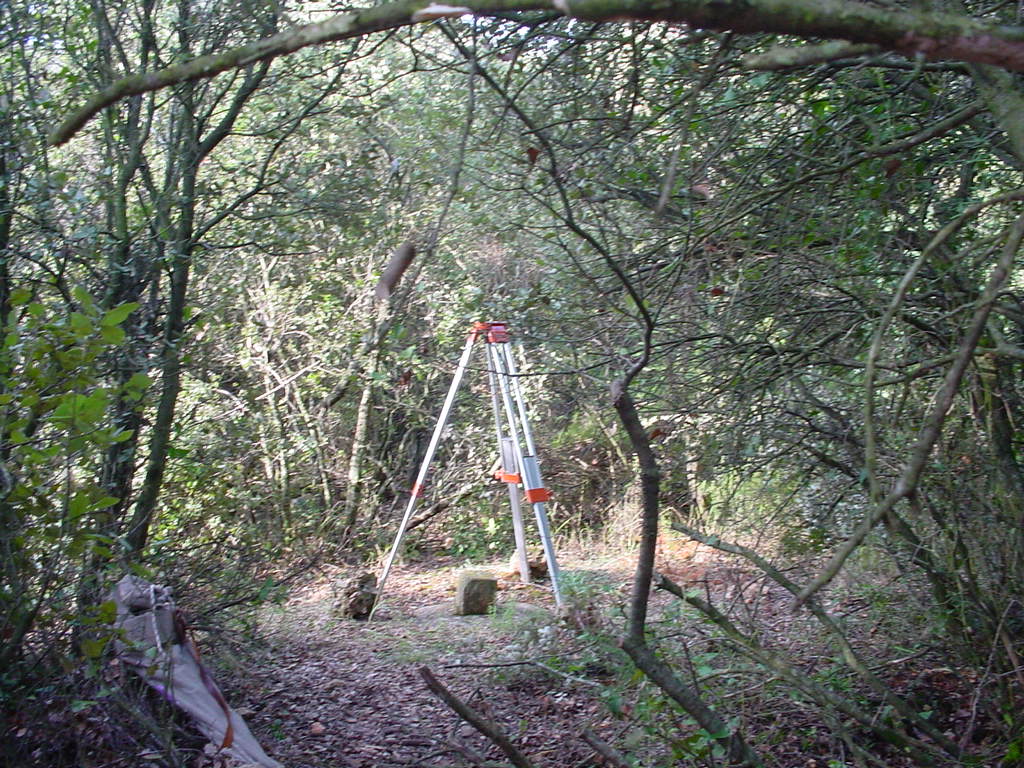
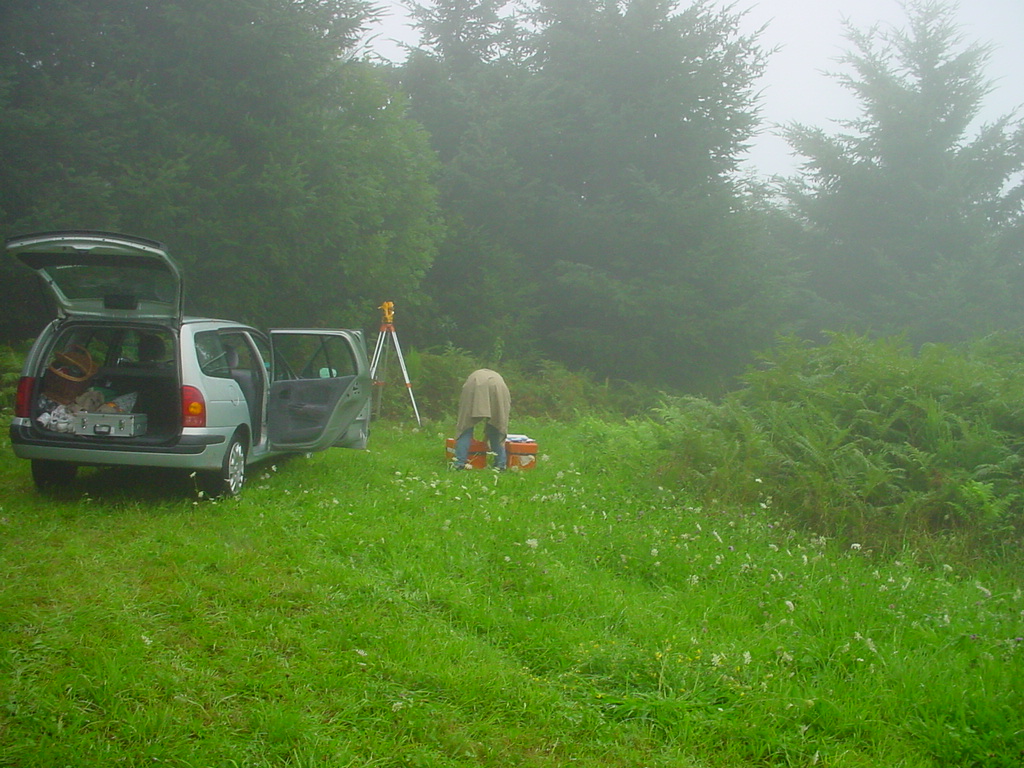
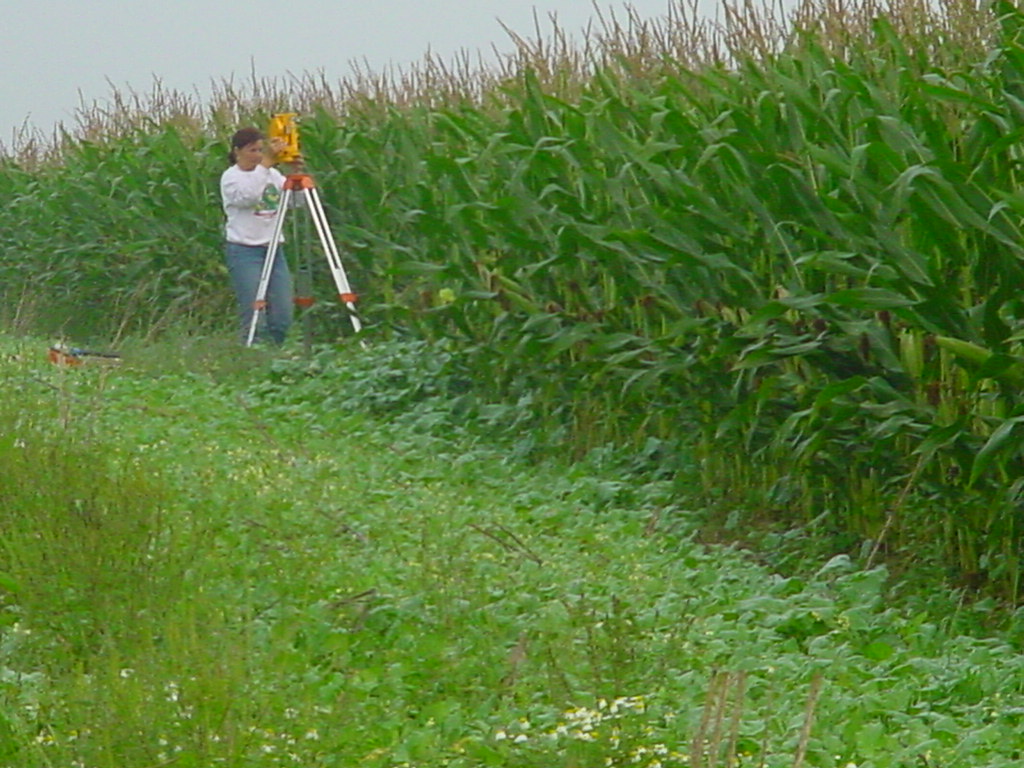
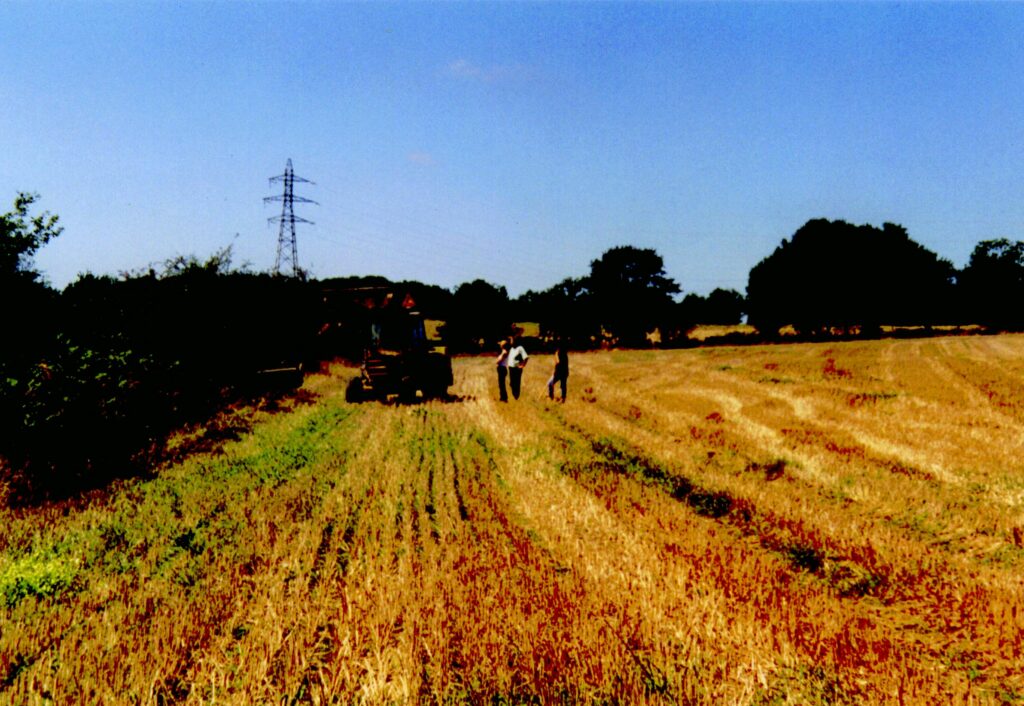
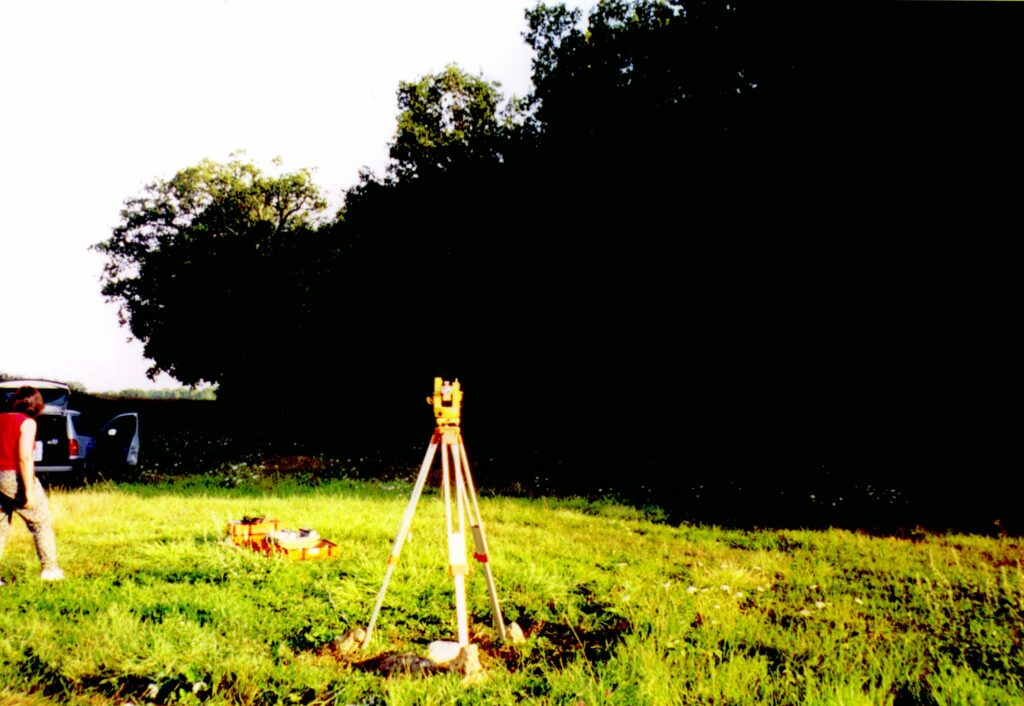
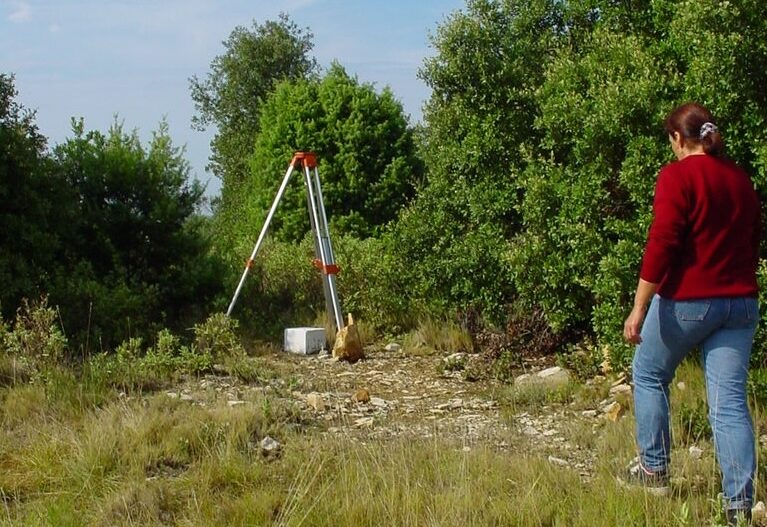
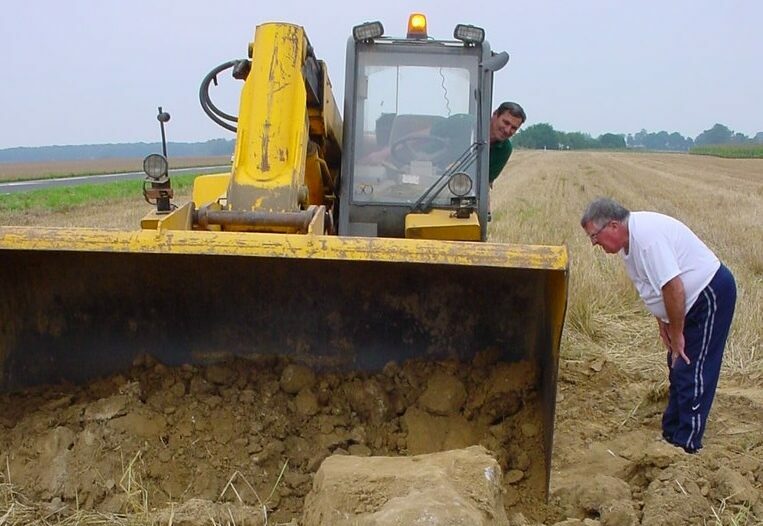
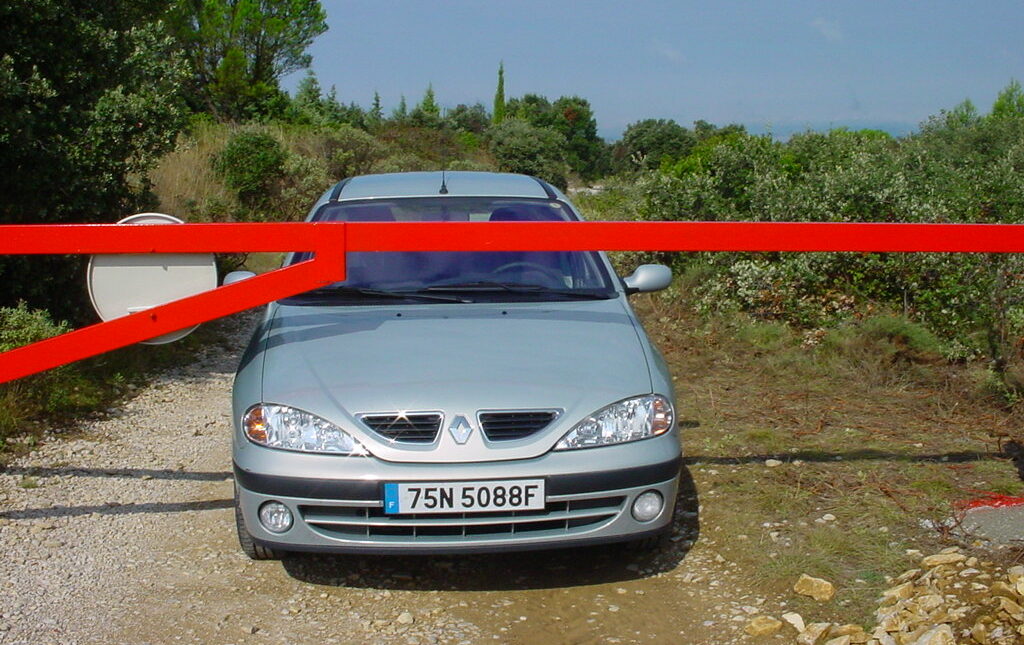
Magnetic repeat stations are temporarily occupied sites where periodic measurements of the intensity and direction of the Earth’s magnetic field are carried out. The establishment of these networks in France as early as the late 19th century served a dual purpose: mapping the spatial distribution of the magnetic field—mainly caused by the magnetic properties of the Earth’s crust—and then tracking changes over time in the intensity and direction of this field, which are linked to very long-term variations in the functioning of the geodynamo. The pursuit of better spatial resolution led to measurements being taken at 1,328 stations between 1921 and 1927, each station corresponding on average to a square 20 km on a side.
This magnetic mapping was greatly improved during the general magnetic survey of France and the continental shelf, carried out under the direction of the Institut de Physique du Globe (1964–1965). While the spatial distribution of magnetic anomalies can be considered a geophysical invariant on human timescales, maps of iso-intensity, declination, and inclination must be regularly updated. I participated at two French measurement campaign (1997, 2002) a half century after the “modern” network of repeat stations was begun.
North Magnetic Pole – NMP (2001)
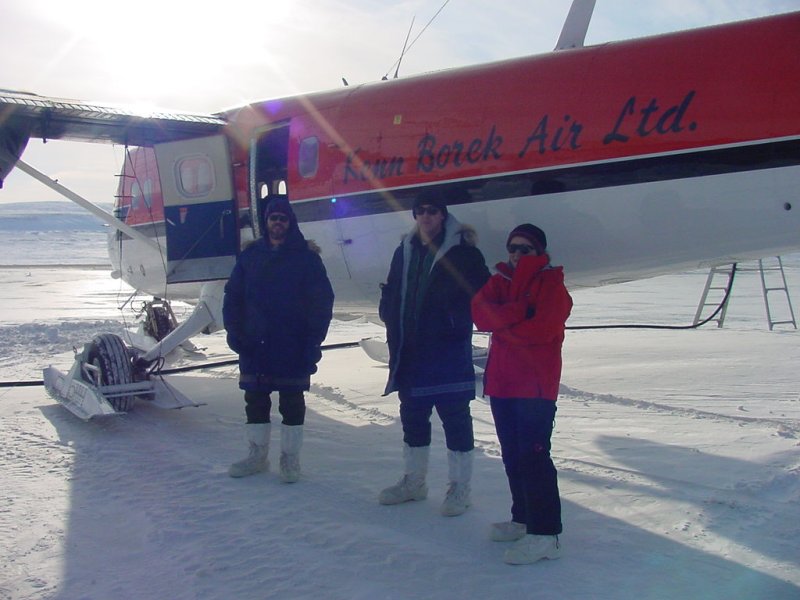
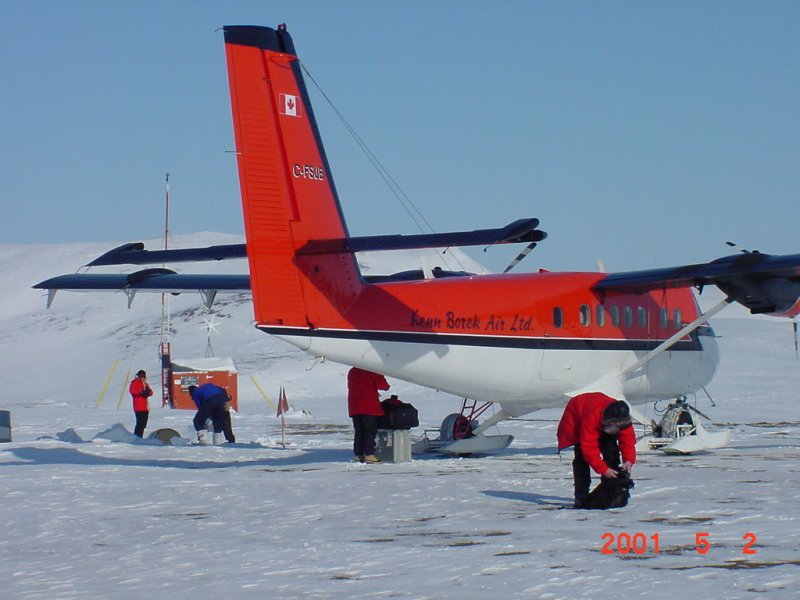
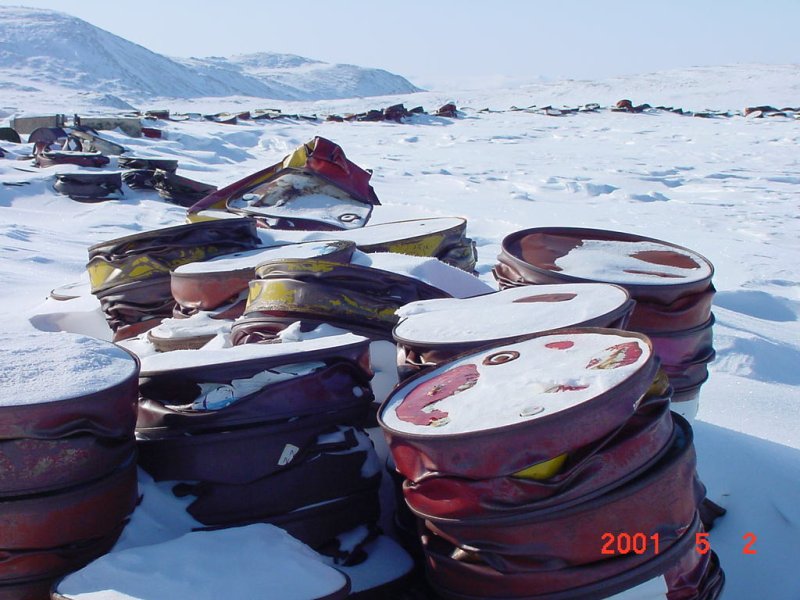
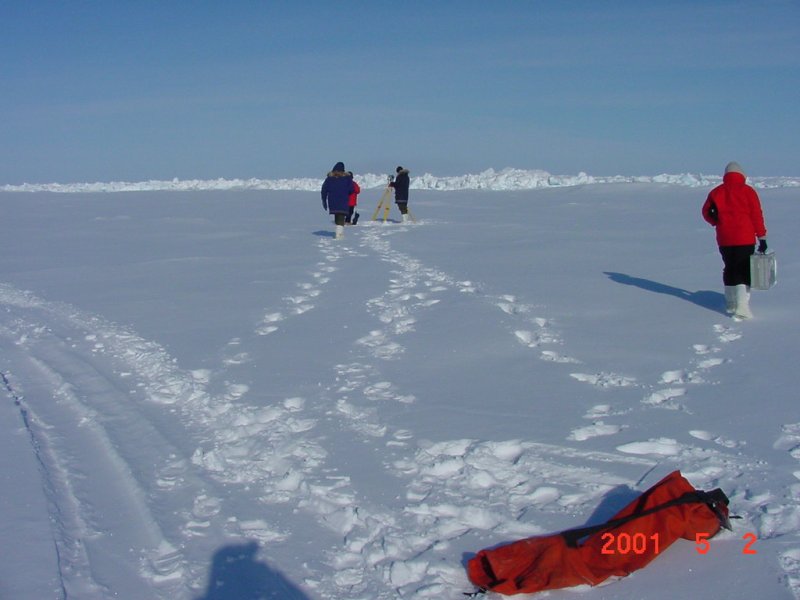
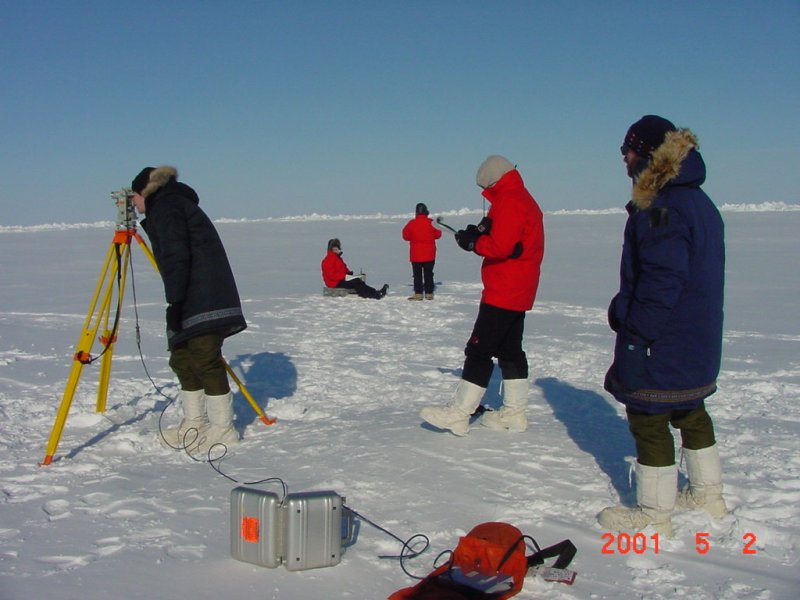
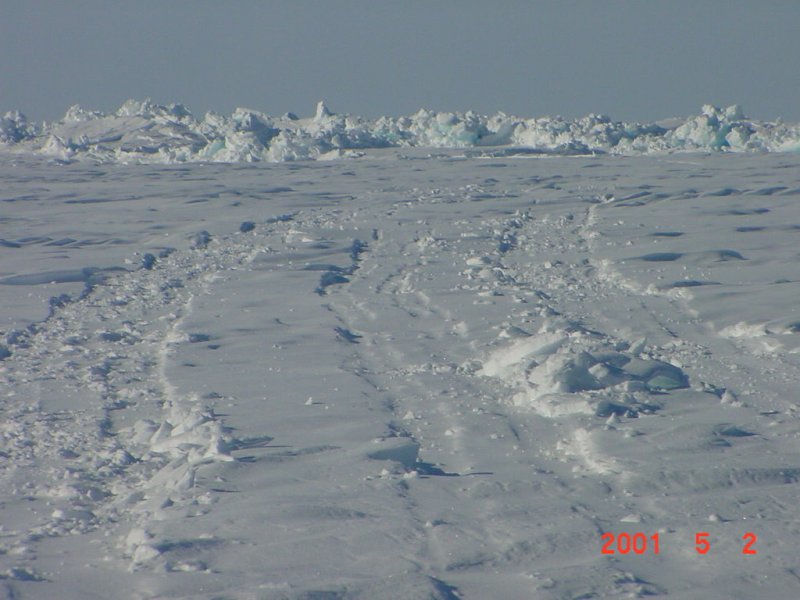
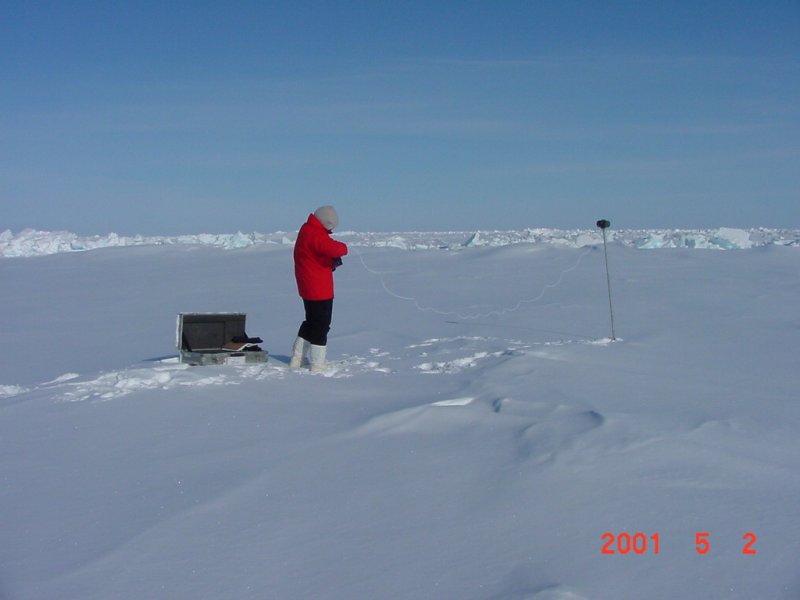
Surveys to determine the location of the North Magnetic Pole (NMP) have been carried out on a regular basis since 1947. Such surveys serve two basic functions: scientific and educational. The public has always been fascinated and often misinformed about the nature and significance of the NMP. Scientifically, NMP surveys serve to test the veracity of global magnetic field models and reveals facts about its motion that might otherwise be overlooked when using global models. The most recent survey of the NMP, completed in May, 2001, showed an unprecedented increase in the pole’s rate of motion. Since observation sites were located in oceanic areas, the survey was carried out only during the short window in which the sea was frozen, the temperatures were warm enough to work, and there was sufficient sunlight to allow safe landing on the ice – late April to mid-May. Each observation required about one hour on the ice, which, given the present distance of the NMP from the base of operations at Resolute Bay, limits the number of observations that were made in one day to four. At each site the direction of the magnetic field was measured using a DIM, consisting of a single-axis fluxgate sensor mounted on a non-magnetic theodolite which was also used for sun observations needed to determine the direction of true north, a requirement for computing magnetic declination. A proton magnetometer was used for measuring total intensity.
For more information
- Newitt, L.R., M. MANDEA, L.A. McKee, and J.J. Orgeval, Recent acceleration of the North Magnetic Pole linked to magnetic jerks, EOS, vol 83, 381;388, 2002.
- MANDEA, M., and E. Dormy, Asymmetric behavior of magnetic dip poles, Earth Planets Space, 55, 153-157, 2003.



Hawaii-2 Observatory – H2O (2003)
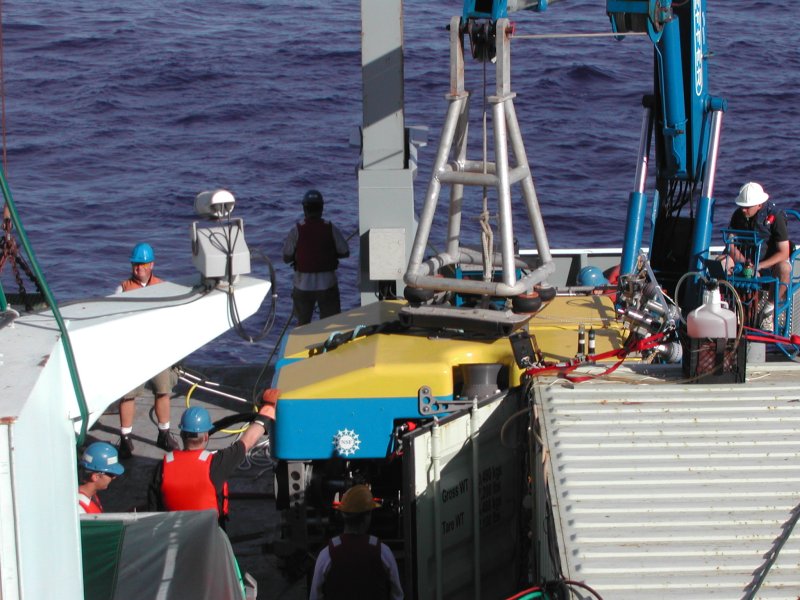
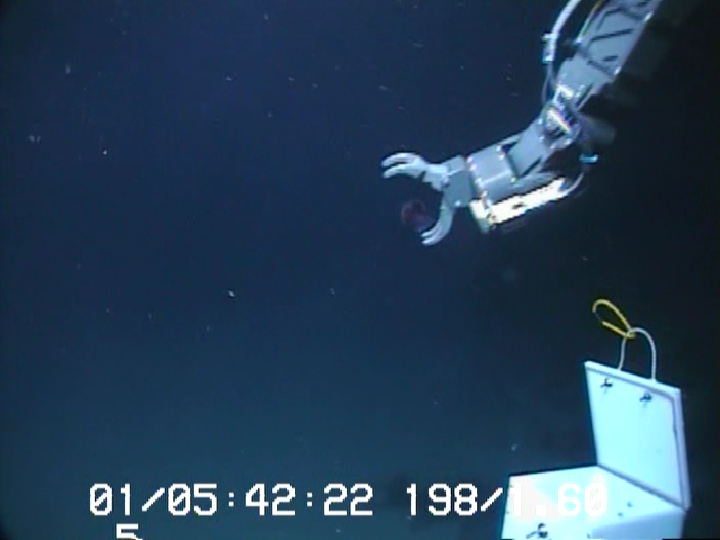
A permanent deep ocean scientific research facility the Hawaii-2 Observatory (H2O) was installed on the retired HAW-2 (near 28°N,142°W) commercial submarine telephone cable in September 1998. H2O consists of a seafloor submarine cable termination and junction box in 5000 m of water located halfway between Hawaii and California. The physiography in this area is one of abyssal hills with a nominal but variable 50—100 m cover of clay sediment. The local relief around the H2O junction box is quite subdued; surveys of the site reveal no rock outcrops and very gentle relief of a few tens of meters on a smoothly sedimented bottom.
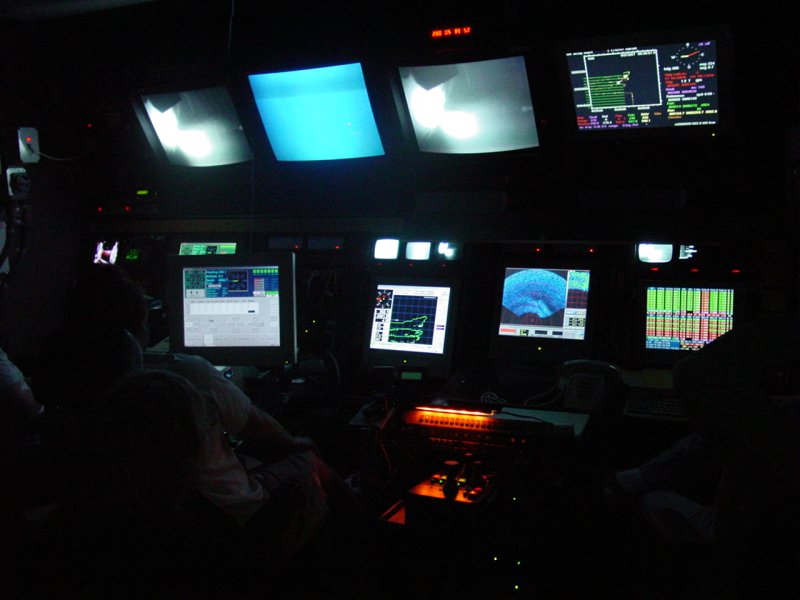
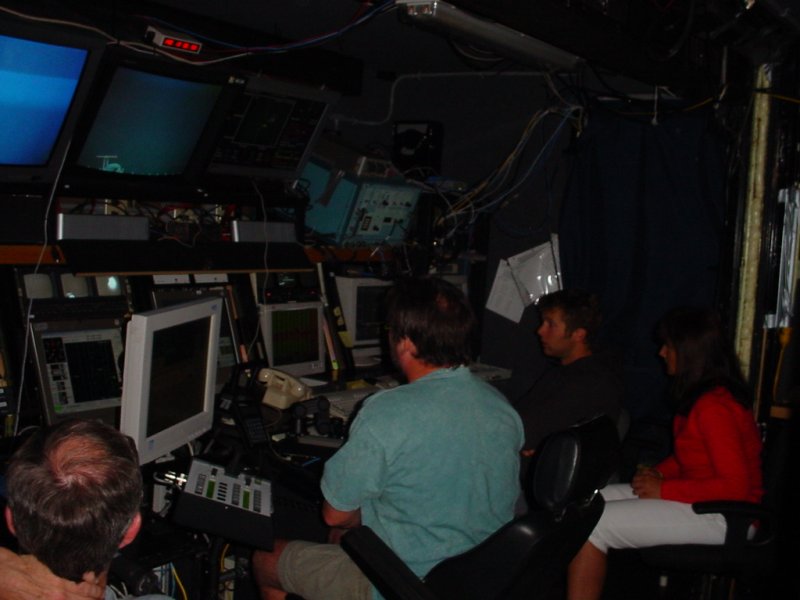
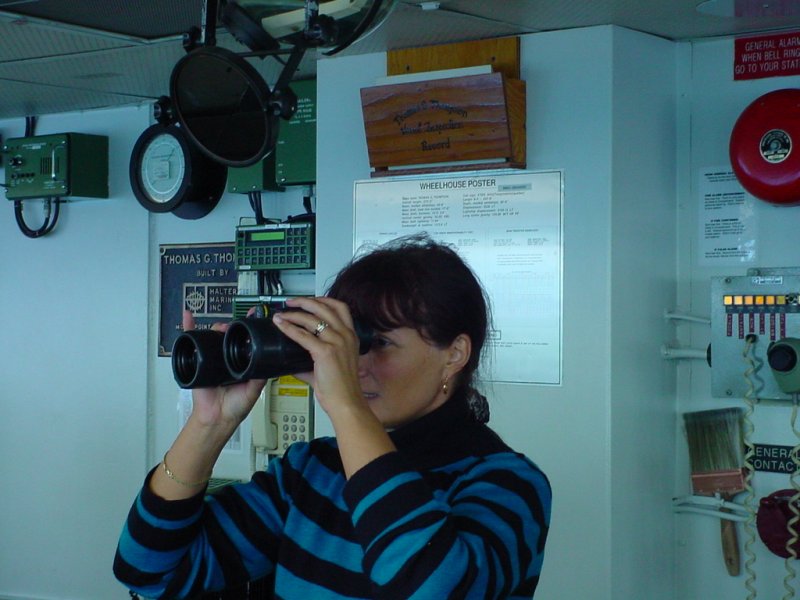
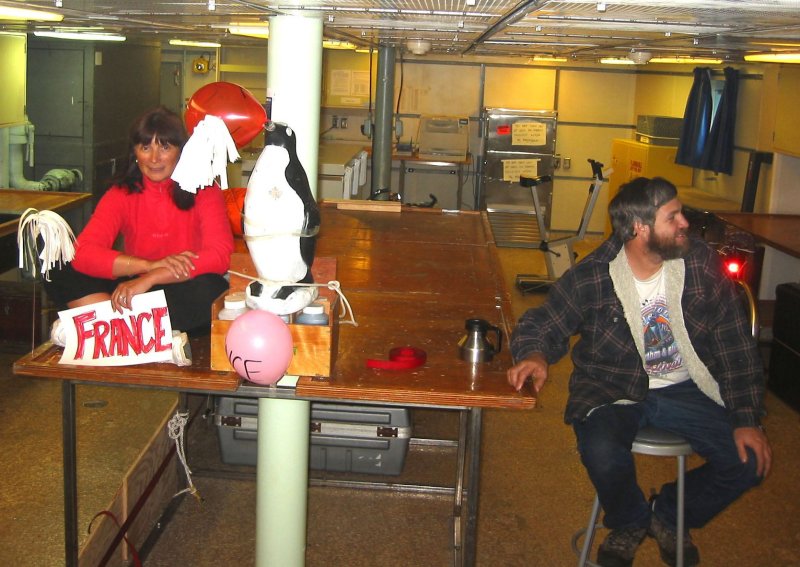
The H2O infrastructure has been in essentially continuous operation since its installation. During 2003, a major upgrade to the communications architecture was completed. Installation of all instruments was simplified through the inclusion of an H2O instrument interface on the deep remotely operated vehicle (ROV) Jason II. One proposed instrument was for accurate measurement of the core geomagnetic field and its secular variation, i.e. a seafloor geomagnetic observatory. Two such observatories have been developed to be installed at H2O in 2003. The first is of French design, the other one US, very similar (reflecting the cooperative nature of the design process). Unfortunately, none of them was installed in 2003. However, during the 2003 Thomson cruise, a very detailed magnetic survey around the junction box, using a magnetometer installed on Jason II, was performed. The obtained magnetic map is useful to decide the final installation of the two seafloor geomagnetic observatories.
For more information
- Chave, A. D., J. W. Bailey, S. Beaulieu, R. Butler, F. K. Duennebier, J. H. Filloux, D. Harris, M. MANDEA, J. A. Orcutt, K. Smith, R. Stephen, P. Tarits, F. L. Vernon, and F. B. Wooding, 2003-2004 upgrades and additions to the Hawaii-2 Observatory, Proceedings 3rd International Workshop on Scientific Use of Submarine Cables and Related Technologies, 14-18, 2003.
- Tarits, P., M. MANDEA, M. Calzas, C. Drezen, and A. Dubreule, Seafloor geomagnetic observatory program in France, Proceedings 3rd International Workshop on Scientific Use of Submarine Cables and Related Technologies, 63-66, 2003.




South Africa (2005 – 2009)
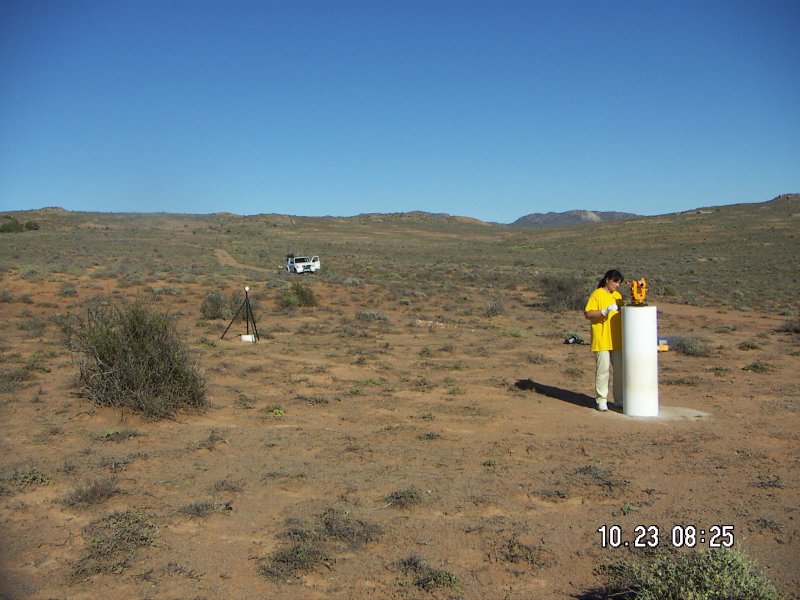
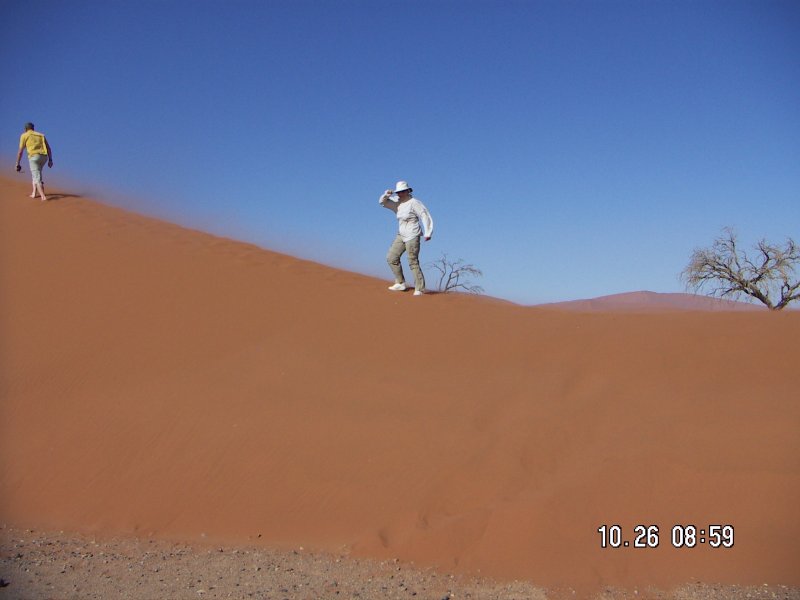
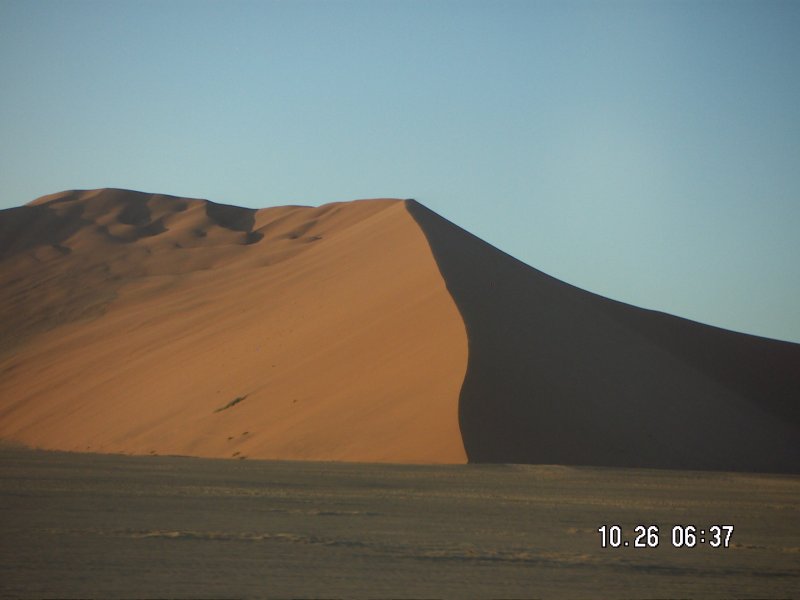
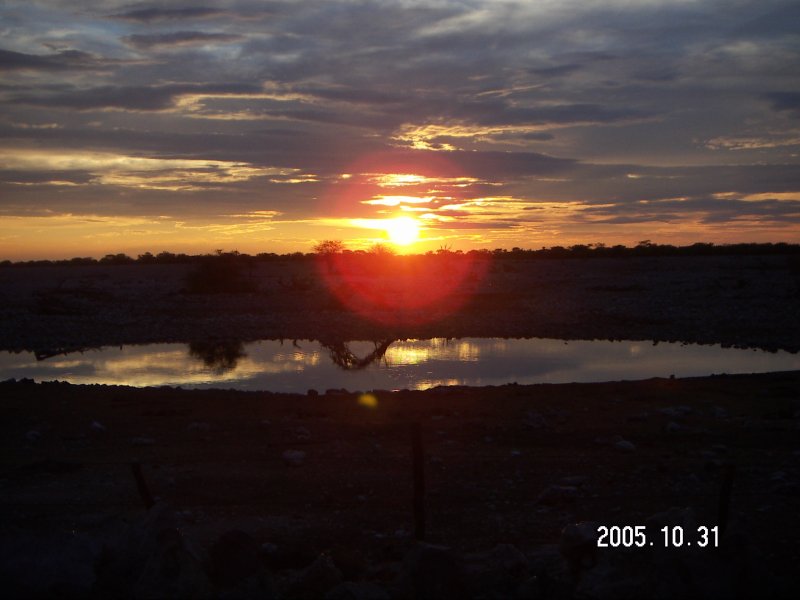
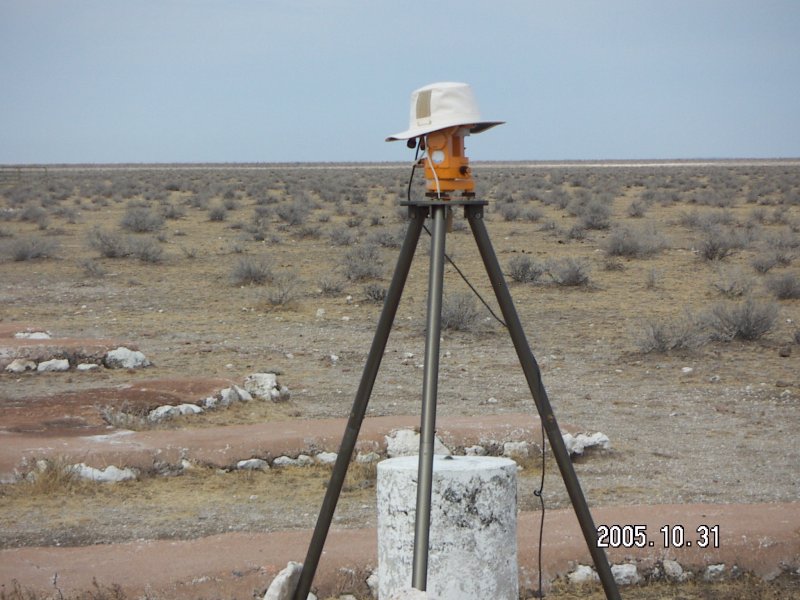
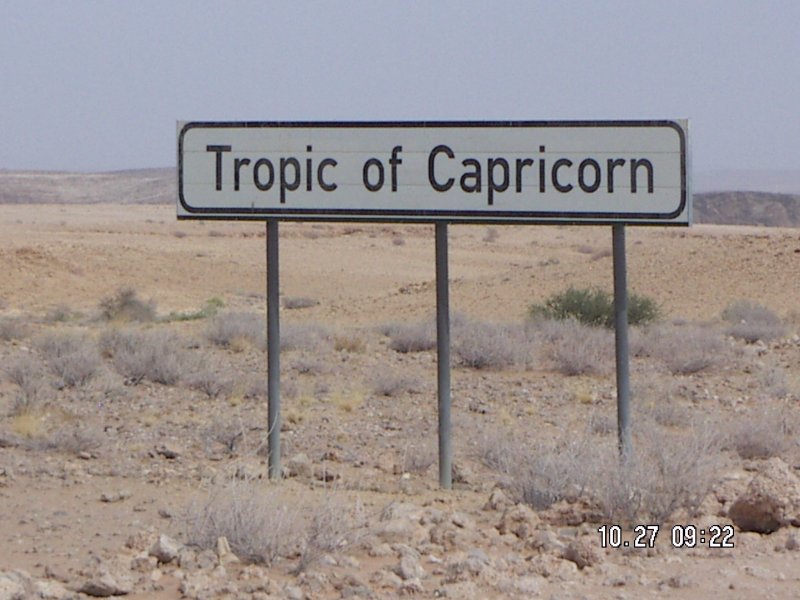
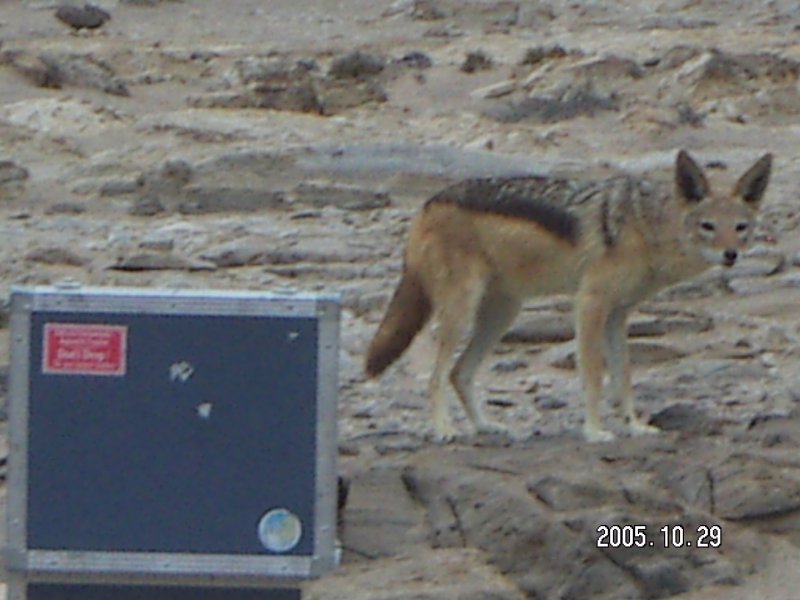
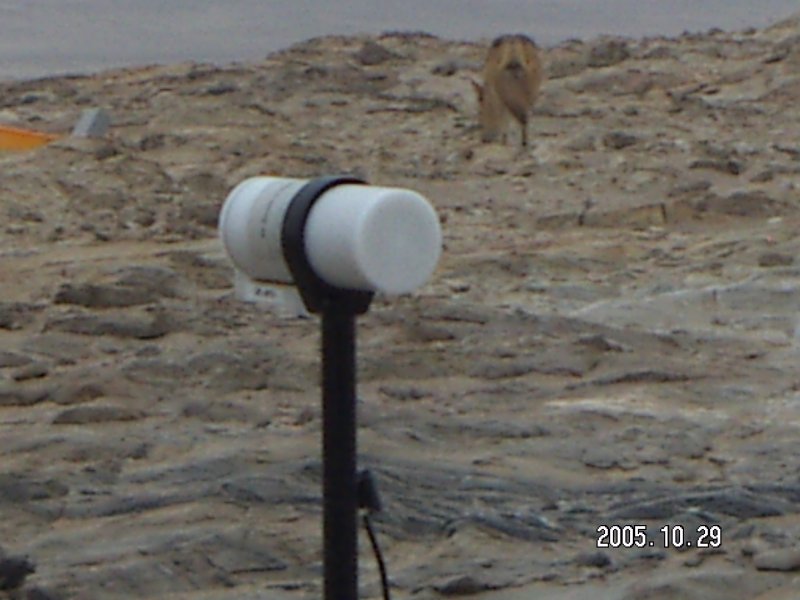
Since the start of systematic magnetic field recordings, some hundred years ago, a continuous decrease of the Earth’s magnetic dipole moment has been observed. The change in the field strength is, however, not evenly distributed over the globe. At the Earth’s surface the most rapid decrease of the core field is observed in the Atlantic region. Southern Africa is in this regard the continental area where these geomagnetic field changes can be best studied. Since the establishment of the Hermanus Magnetic Observatory (HMO) in South Africa in 1941, the total field intensity has decreased by 20%, which is greater than the decrease at any other magnetic observatory. The distribution and evolution of the radial magnetic field component at the core-mantle boundary, during the past century, shows a region of reversed field direction which propagates north-eastward. At present this patch is just below Southern African continent. By closely monitoring the magnetic field changes in the southern part of Africa we have the opportunity to track this patch and record its evolution. These objectives can be achieved by installing new observatories in this region and by measuring every year the Southern African Continent repeat station network. This was done in 2005 in some 40 stations located in South Africa, Namibia and Botswana. Here pictures from Eastern leg of the campaign are shown.
For more information
- MANDEA, M., and M. Purucker, Measurements of the Earth’s magnetic field from space, Surveys in Geophysiscs, 26, (No. 4), 415-459, DOI: 10.1007/s10712-005-3857-x, 2005.
- Dormy, E., and M. MANDEA, Tracking geomagnetic impulses down to the core-mantle boundary, Earth Planet. Sci. Lett., 237, 300-309, 2005.